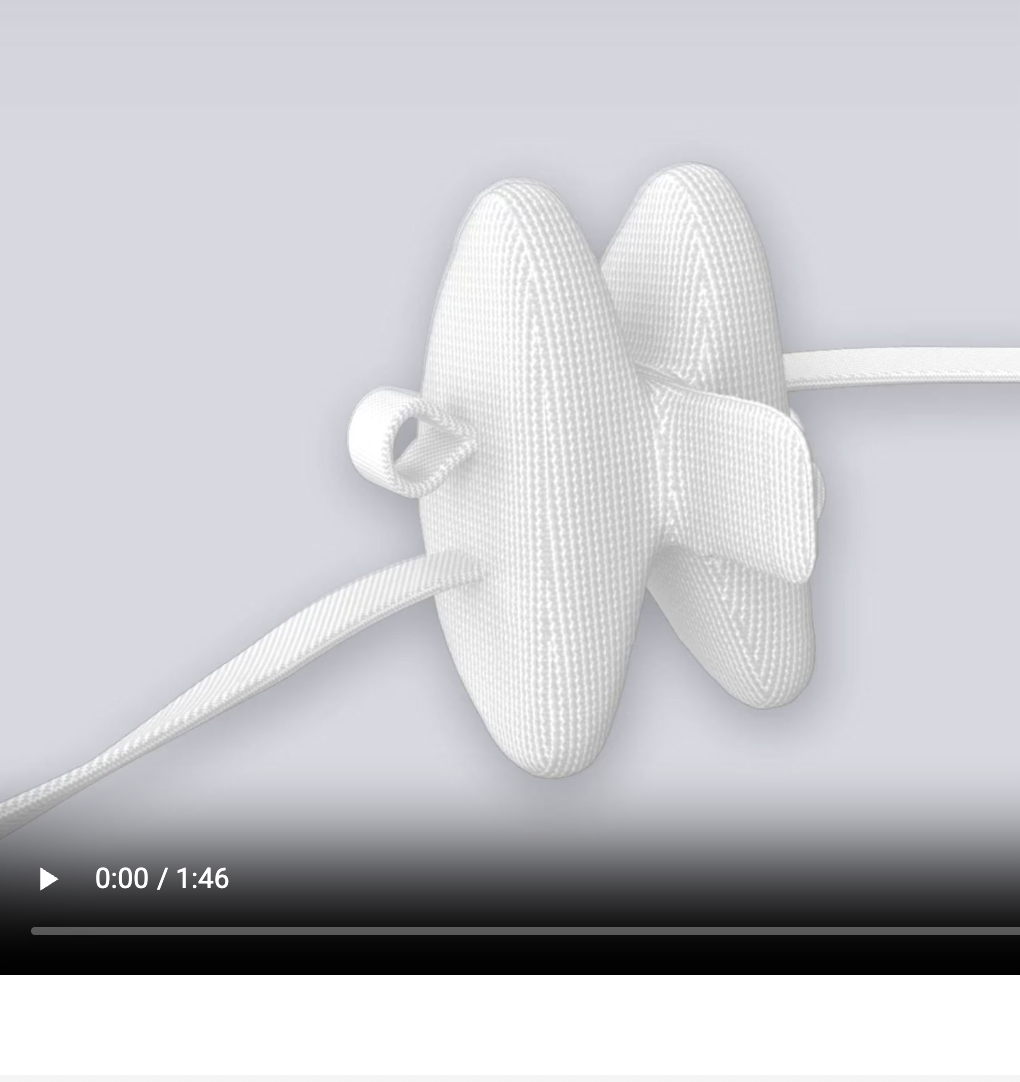
DIAM™ Spinal Stabilization System is the first posterior motion-preserving device approved in the U.S. for the treatment of moderate to severe primary low back pain
A breakthrough treatment addressing both undertreatment and overtreatment in the current care pathway, with robust evidence demonstrating superiority over non-operative care
DIAM™ Spinal Stabilization System has demonstrated substantial early and sustained pain relief and a positive safety and effectiveness profile, supported by more than 11 years of clinical data
Full FDA PMA received without requirement for post-approval confirmatory trial
MÉRIGNAC, France–(BUSINESS WIRE)–Companion Spine, the French-American specialist in surgeon innovated spine implant surgery, announced that the U.S. Food and Drug Administration (the “FDA”) has approved the DIAM™ Spinal Stabilization System (P240043). DIAM™ Spinal Stabilization System is the first posterior motion-preserving device approved in the U.S. for the treatment of moderate to severe primary low back pain secondary to DDD at a single lumbar level (L2–L5) in patients who remain symptomatic after at least six months of non-operative care.
DIAM™ Spinal Stabilization System was granted Breakthrough Device Designation by the FDA in October 2021 as it is reasonably expected to address an unmet clinical need in a large and underserved patient population: those inadequately treated by non-operative care but not eligible for more invasive reconstructive procedures, such as spinal fusion.
“FDA PMA of DIAM™ Spinal Stabilization System is a landmark moment in the evolution of Companion Spine as a company solely focused on Total Disease State Solutions™ for degenerative spine diseases,” said Anthony G. Viscogliosi, Chief Executive Officer of Companion Spine. “We have built this organization through strategic acquisitions and relentless innovation, focused on expanding the world’s largest portfolio of minimally invasive stabilization solutions. Since 1997, Dr. Jean Taylor’s DIAM™ Spinal Stabilization System has helped patients across the world, and now, with FDA approval, it can also be shared with patients across the U.S. We thank him for his vision of better patient care and continue to pursue this goal of offering treatments that are faster, safer and more cost-effective, and that restore quality of life to those living with spine pain.”
FDA approval is based on comprehensive clinical evidence, including a prospective, randomized, multicenter Investigational Device Exemption (“IDE”) trial and long-term follow-up over an average of 11.5 years.
Key Clinical Findings:
DIAM™ Spinal Stabilization System demonstrated superiority to non-operative care on the primary endpoint of composite clinical success (“CCS”) at 24 months: 67.4% CCS with DIAM™ Spinal Stabilization System vs. 11.9% with non-operative care Bayesian posterior probability of superiority >0.999 Patients treated with DIAM™ Spinal Stabilization System experienced rapid and sustained improvements across all clinical domains: 77.0% Oswestry Disability Index (“ODI”) responder rate at 24 months 83.2% back pain responder rate at 24 months Durable improvements through an average of 11.5 years in the long-term follow-up cohort, with 86.4% ODI and 86.4% back pain responder rates High and sustained treatment satisfaction, with 87% of the patient population willing to make the same choice 11.5 years later Across the randomized cohort, DIAM™ Spinal Stabilization System demonstrated: Low rates of device-related serious adverse events: 1.6% No device migrations or device failures reported through long-term follow-up of 11.5 years 95.7% freedom from device removal at an average of 11.5 years “Experience with DIAM™ Spinal Stabilization System through the initial IDE study and then long-term, 11.5-year follow-up has been positive for both myself and the patients in the study,” said Alexander Bailey, M.D. “Relief of back pain has been significant and avoiding fusion for primary back pain has had long-term positive impact. It was great to see in all of the patients I implanted for the study, not a single one needed to be converted to a fusion and patients sustained clinical satisfaction through 10+ years follow-up. I look forward to being able to (once again) offer patients this technique to treat back pain from DDD that fails non-operative care and provide it as an alternative to fusion in select cases.”
“As a spine surgeon dedicated to improving the lives of patients suffering from low back pain, I am thrilled by the FDA’s approval of this groundbreaking intervention,” said Matthew Gornet, M.D. “This is precisely the advancement we’ve been waiting for in the field of spinal care. Delivered through a minimally invasive outpatient procedure, it minimizes recovery time and disruption to daily life, while demonstrating minimal downstream, long-term adverse effects. I couldn’t be happier to have this as a viable option in my arsenal.”
DIAM™ Spinal Stabilization System offers a posterior motion-preserving, reversible, minimally invasive solution, designed to offload painful posterior elements while maintaining segmental mobility and leaving future surgical options open.
“We are delighted to bring this 20-year PMA journey to a successful close with a positive outcome,” said Nazanine Cloix, Chief Technology Officer of Companion Spine. “This milestone enables us to deliver early, meaningful and lasting relief to appropriately indicated patients in the U.S. with a solution that preserves both motion and anatomy. The FDA’s decision to grant approval without requiring a post-approval study underscores the strength of this evidence.”
Over the past two decades, more than 250,000 DIAM™ Spinal Stabilization Systems have been implanted in more than 200,000 patients and received regulatory clearance or market acceptance in 76 countries, including France, Germany, the United Kingdom, Switzerland, India, Brazil and South Korea.
For more information, please visit https://companion-spine.com/diampatient/.